The Health Hoard: Why Every Swing of the Coil Is Better Than the Gym
 admin
Posted On November 21, 2025
admin
Posted On November 21, 2025

I was thinking the other day, dangerous I know”…But hear me out…. I’m a sprightly 46, but if you described metal detecting to a non-detectorist, you would probably get something like this back:
“So you… walk slowly in a field… listening to beeps… in the rain… for fun then do ya mate?”
Correct.
What they miss is that this “slow walking in a field” is quietly doing more for your physical and mental health than most people’s abandoned gym memberships. Metal detecting is exercise, therapy, mindfulness, social connection and fresh air, badly dressed as a weird hobby with muddy boots.
This is the Daily Dig case for metal detecting as a genuinely healthy way to live. Not just “better than the sofa”, but legitimately good for your body, your brain, your stress levels and your sense of who you are in the grand story of this island.
And because it is The Daily Dig, we will also be brutally honest about the bad backs, the stiff shoulders and the days when your “cardio session” consists mostly of digging ring pulls in a gale.
PHYSICAL HEALTH: STEPS, SWING, DIG, REPEAT
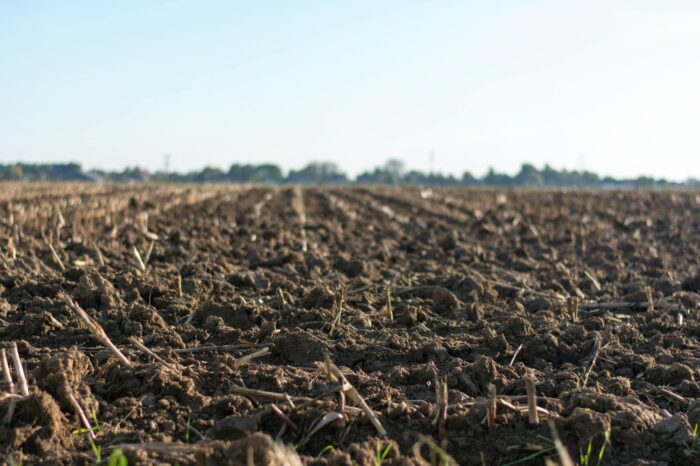
Let’s start with the obvious: you walk. A lot. On a typical UK permission day you will cover several miles without really noticing. No treadmill, no neon ill fitting lycra, no app telling you that you are in the “fat burn zone” – just you, the machine, and a farmer’s field that absolutely does not look as big when you are parked at the gate.
What your body quietly gets out of it:
- Low-impact cardio
Consistent walking on mixed terrain keeps your heart rate in that sweet, sustainable zone. It is not a sprint; it is a plod. But plodding for four to six hours is exactly the kind of activity doctors keep nagging people to do and most people ignore. You, however, are doing it for the chance of a hammered. - Strength and mobility
Think about the movement pattern: swing the coil, stop, kneel, dig, lever, twist, stand, fill in, move on. It is basically farm-flavoured yoga with added aluminium. Your legs, glutes, core, shoulders and arms all get used. You get repeated squats without calling them leg day. - Balance and coordination
Uneven ground, furrows, ruts, stubble, sticky clay, tractor ruts pretending to be trenches – you are constantly adjusting and stabilising. Ankles, knees and hips learn to respond. Over time, that improves balance and reduces the chance of you going over like a sack of potatoes when you step off a kerb in “normal life”. - Fresh air and daylight
Wild thought: being outside in actual daylight is good for you. Vitamin D from the sun (yes, even in Britain when it occasionally remembers to show up), improved sleep patterns from natural light exposure, lungfuls of cold air instead of aircon and printer toner.
Meanwhile, your mate who sneers at “grown men with toys in fields” has been sat at a desk for ten hours and wonders why he sleeps badly and feels like a potato in a hoodie!!!!
THE HONEST BIT: THE DETECTORIST’S BODY NIGGLES
Of course, nothing is perfect. If you do anything for hours on end without thinking about posture, your body will eventually file a complaint.
Usual culprits:
- Back strain from constant bending and poor digging technique
- Shoulder and neck tension from swinging a heavy detector badly balanced
- Knees complaining if you kneel and rise like a collapsing deckchair 300 times a day
- Hands and wrists from over-gripping the shaft or using a heavy spade
This is where most hobbies just shrug. We do not. If you want the health benefits, you have to be just a little bit intentional.
Simple fixes:
- Get the shaft length and balance right – coil close to the ground, arm cup and handle adjusted, no hunching
- Swap arms occasionally – even 10–15 minutes swinging with your non-dominant arm gives the overused side a break
- Use a decent spade and let the tool do the work – you are a detectorist, not a badger
- Stretch when you get home – hamstrings, hips, lower back, shoulders; you are not made of titanium
Do that, and detecting becomes a long-term health habit, not something you “used to do before your back went”.
MENTAL HEALTH: ESCAPING THE ETERNAL NOTIFICATION
Now for the bit most detectorists feel but rarely label: what this does for your head.
Modern life is a constant bloody barrage of emails, Teams, WhatsApps, alerts, feeds, the slow psychological harm of people saying “quick question” when they mean “complex nightmare”.
Then you step into a field. The signal drops to one bar. The only notification sound is a 2D multi-tone on a silver coin. Your world shrinks to:
- The hum of the threshold
- The sweep of the coil
- The feel of the ground
- The distant tractor or the wind in the hedge
Congratulations: you have accidentally discovered mindfulness!!!!
Metal detecting is a rolling, four-hour meditation that nobody would be caught dead calling meditation. Your attention is anchored to the present moment: where your coil is, how the signal sounds, what the soil is like. You cannot doomscroll while pinpointing. You cannot fire off a passive-aggressive email while your hands are full of clay.
What your brain gets from that:
- Reduced stress
Your nervous system gets a break from the constant micro-stressors of screens and interruptions. That eases cortisol levels and helps your body get back to something like a baseline. - Mental quiet
You know that lovely moment when you realise you have not thought about work for two hours because you were too busy chasing a faint whisper at eight inches? That is mental rest. It is rare, and it matters. - Flow state
Sometimes, on a good day, you hit flow. Time bends. You are just doing the thing. Swing, beep, dig, investigate, repeat. Flow is associated with improved wellbeing, creativity and overall life satisfaction. You are not just “killing time”; you are in a genuinely healthy mental state. - Emotional reset
You can take a bad week, a knot of worry, a tangled mess of thoughts into a field, and by the time you come out, a lot of that has been quietly processed in the background. You have not “solved” everything, but you have given your brain the space to line things up more sensibly.
And unlike “self-care” trends that usually boil down to buying candles and posting about it, this one actually involves movement and mud.
THE JOY OF SMALL WINS (AND WHY CRAP IS STILL MEDICINE)
Then there is the reward loop.
Your brain loves a small, frequent hit of achievement. Detecting is built on exactly that:
- You get a signal.
- You interpret it.
- You dig.
- You reveal something.
Sometimes that something is a hammered. Sometimes it is a Fanta ring pull from 1994. But the process is the same: curiosity, effort, reveal, result.
Even the junk gives closure: you had a question, you dug the answer. That repetition is oddly satisfying, even when you are cursing another blob of molten aluminium like it owes you money.
Over time, that trains patience and resilience:
- You learn to tolerate delayed gratification.
- You learn that most days are not “find of a lifetime” days and that this is fine.
- You develop something dangerously close to optimism: “Next signal might be the one.”
In mental health terms, that is gold. You are practising hopeful persistence, repeatedly. It is hard to be entirely defeated by life when a tiny part of you still believes the next beep might be a Saxon penny.
SOCIAL HEALTH: PEOPLE WHO UNDERSTAND WHY YOU’RE EXCITED ABOUT BITS OF GREEN METAL
Detectorists are, allegedly, loners. The reality is more interesting.
There is a social health benefit in belonging to a tribe of people who understand:
- Why you are weirdly emotional about a bent, illegible hammered
- Why a plain Georgian copper from a local permission can mean more than a shiny milled coin from a random rally
- Why you are messaging photos of crusty metal at 7am on a Sunday
Club meets, rallies, WhatsApp groups, permissions shared with mates – these are all ways of staying socially connected in a way that is built around shared experience, not empty small talk.
Still here? Thanks for reading! ok, so…the Social health benefits:
- A sense of belonging
Being “one of us” is powerful. Detectorists collectively occupy a strange little space between history, countryside and hobby culture. When you meet others who get it, you are less alone. - Peer support
You might not call it that, but when people are checking in on each other, arranging digs, celebrating finds, commiserating over rubbish days – that is low-key mental health support. - Intergenerational contact
Clubs are often a glorious mix of ages. Your field buddy might be a retired engineer, a young lad from down the road, a nurse, a builder, a tech consultant. It keeps your perspective wide and your world bigger than your own demographic bubble. - Confidence and communication
Explaining your finds to landowners, farmers, club members, the odd passing dog walker who wants to know what you are doing – all of it keeps your social skills alive. The more you talk about history and finds, the more you own your knowledge, and that is good for self-esteem.
NATURE AND PLACE: A HEALTHY OBSESSION WITH WHERE YOU WALK
Modern life is dislocated. Most people have no idea what happened on the land they live on before the local Tesco appeared. Detectorists do not have that problem.
We walk fields with a sense of time stacked under our boots. We:
- Learn the lie of the land – ridges, old footpaths, hollow ways, wet patches, high spots
- Notice seasons properly – when the plough goes in, when the crop is up, when the stubble is off
- Track weather – soil conditions, frost, the way certain ground responds after heavy rain
This is not just quaint. It is healthy. Humans are not meant to live entirely abstracted from the natural world.
Health benefits of this groundedness:
- Seasonal rhythm
Your year has a shape: pasture periods, sowing, growing, harvest, stubble. There is a natural cycle to when you can and cannot detect. That rhythm helps you feel time properly, not just as a blur of deadlines. - Sensory richness
Wind, rain, sun, the feel of soil type on your trowel, the smell of wet earth, the calls of birds – that sensory complexity is a quiet antidote to the flat, artificial environment of screens and fluorescent lights. - Connection to place
Knowing that “this corner of this field” is where you pulled a Henry III cut half, and that the footpath nearby lines up with a mark on an 1800s map, gives you a relationship with the landscape that is deeper than “nice view”. That sense of rootedness is linked to resilience and wellbeing.
IDENTITY, PURPOSE, AND WHY THIS IS MORE THAN JUST “A HOBBY”
There is another layer to health that rarely gets discussed: identity and meaning.
Detectorists are not just “people who detect”. We are, if we are doing it properly:
- Amateur archaeologists
- Local historians
- Stewards of finds
- Interpreters of the past to landowners, families, friends, sometimes museums
Having a role like that in your own life is powerful. It pushes back against the hollow feeling that your only purpose is to answer emails until you die.
With every find, you are:
- Rescuing an object from eventual destruction
- Putting a small piece of history back into the story (reporting to PAS where appropriate, sharing with landowners, learning the context)
- Building your own thread of expertise – whether that is local medieval coinage, Roman bronze grots, or Victorian farm tokens
Purpose is good for you. Feeling that your free time produces something meaningful – stories, knowledge, connections – is a serious tonic in a world that encourages passive consumption.
THE FLIP SIDE: WHEN THE HOBBY EATS YOU
Of course, any good thing, unchecked, can wander off into obsession. A brief public health announcement:
Symptoms that metal detecting might be nibbling too hard at your life:
- You are physically exhausted, but still pushing out “just one more hour” every time you are out
- You are neglecting sleep, family or work to chase permissions, scroll sales posts, or re-watch the same YouTube field 15 times
- Your mood hinges entirely on whether you found something “good” that day
- You are so locked on finds that you stop enjoying the walk, the landscape and the quiet
Anti-cure:
- Set boundaries with yourself. “Sundays until 1pm only.” “One rally a month, not four.”
- Remember that a field day with nothing but rubbish is still six hours of walking in fresh air away from a screen. The health benefit did not vanish because the best thing you found was a Victorian spoon.
- Keep one eye on balance: this should add to your life, not swallow it.
PRACTICAL WAYS TO MAXIMISE THE HEALTH BENEFITS
If you want to turn metal detecting into a genuinely robust health habit rather than “a thing I do when the stars align”, a few simple moves will help.
Before you go
- Warm up very briefly
A few hip circles, hamstring stretches, shoulder rolls. Two minutes. You will look ridiculous in the farmyard, but your back will thank you at 4pm. - Pack properly
Water, a snack that is not pure sugar, and weather-appropriate layers. Dehydration and hypoglycaemia do not make for good decision-making or enjoyable digs.
In the field
- Pace yourself
You are not being timed. Slow, deliberate sweeps, regular micro-breaks to straighten your back and look at the horizon. - Alternate tasks
Five minutes swinging, then a dig sequence, then a brief stand-and-stretch while you scan the landscape. Think of it as intervals, not punishment. - Observe, don’t just hoover
Engage your brain: why might the finds be falling here? What does the landline suggest? This keeps your mind actively working in a healthy way, not just zoning out into autopilot.
Afterwards
- Cool down
Five minutes of stretching before you cram yourself into the van or car. Lower back, hips, hamstrings, shoulders. Again, you will feel like a prat in the layby, but you will walk better the next day. - Reflect on more than finds
What did today give you: fresh air, headspace, a good chat, learning about a new area? Train your brain to value the whole day, not just “was there silver”.
CONVINCING THE SCEPTICAL PARTNER / GP / COLLEAGUE
Let us arm you with some simple, honest lines for the next time someone raises an eyebrow at your “mud hobby”.
Suggested script, loosely:
- “It is four to six hours of walking, fresh air and sunshine when we get any. That is more sustainable than the gym, and I actually enjoy it.”
- “It clears my head. No emails, no notifications, just me and the field. I come back more relaxed and easier to live with.”
- “I am part of a community, I am learning about local history, and sometimes we contribute to the archaeological record. It is not just wandering around at random.”
The beauty is: it is all true. You do not need to dress it up. You just need to stop underselling what detectorists already know deep down – that this is keeping us saner and fitter than we might otherwise be.
CLOSING: HEALTH BY STEALTH, ONE BEEP AT A TIME
Metal detecting will never be marketed in a glossy brochure as “Britain’s Latest Wellness Trend” – thank God.
No scented candles. No influencer with perfect teeth saying “I’m just obsessed with this new coil, guys.” No subscription box where you get soil and disappointment delivered to your door.
Instead, it is this:
- An alarm set too early on a cold weekend
- A flask, a field, a sky that hopefully does not leak too much
- Miles under your boots without noticing them rack up
- A brain that, for a few hours, is occupied by nothing but sound, soil and possibility
- The occasional little disc of metal that reminds you other people were here, living, working, worrying and losing things centuries before you
Is metal detecting good for your health?
Yes.
Not in a vague, hand-wavy way, but in a very real, physical, mental, social and emotional sense. It gets you moving. It gives your mind a break. It plugs you into landscape, history and other humans in a way that most modern pastimes simply do not.
We may go out chasing treasure, but the real win is this: one day, if someone asks how you kept yourself half-sane in an increasingly noisy world, you can simply say,
“I went for a walk with my detector. And I kept going.”
I bloody love this….
Modern life is a constant bloody barrage of emails, Teams, WhatsApps, alerts, feeds, the slow psychological harm of people saying “quick question” when they mean “complex nightmare”.
Then you step into a field. The signal drops to one bar. The only notification sound is a 2D multi-tone on a silver coin. Your world shrinks

Trending Now
The Day Everything Changed: Detectorists’ Genuine Life-Changing Finds