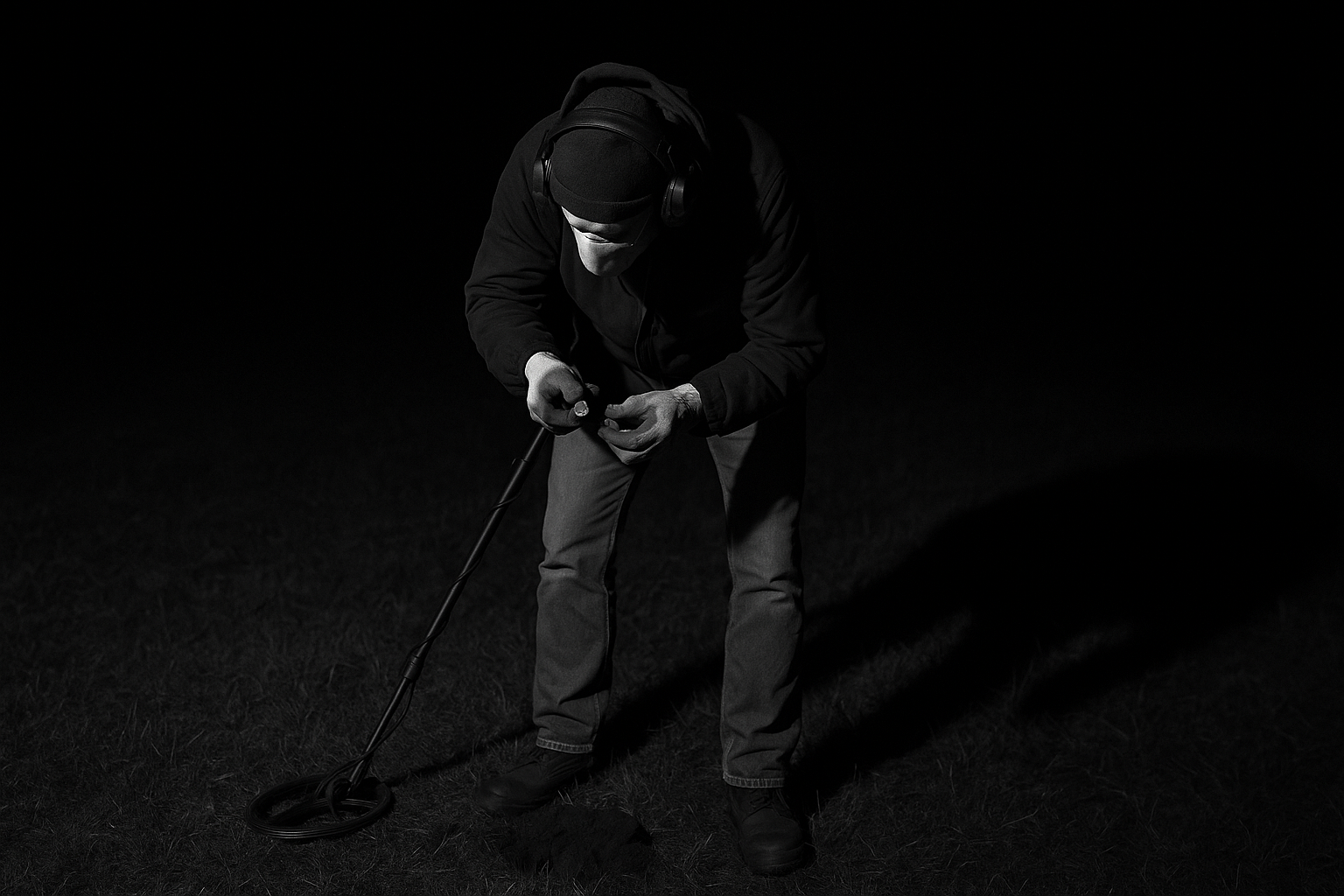
How the Plague Erased Lives, Buried Wealth and Left Its Voice in the Soil
 admin
Posted On November 18, 2025
admin
Posted On November 18, 2025
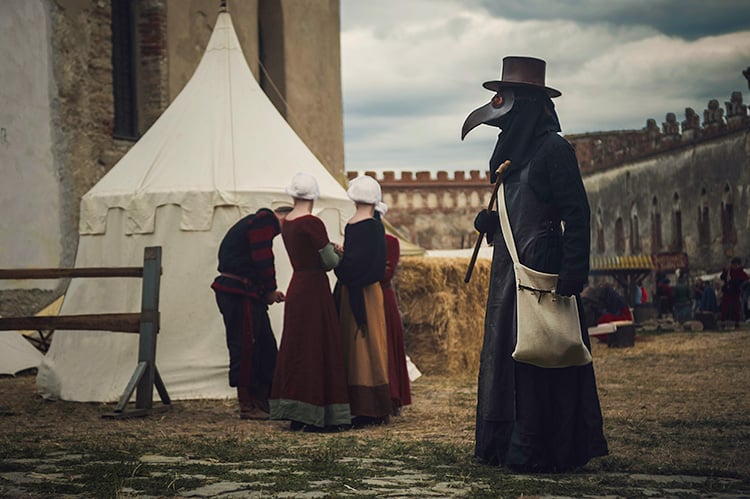
To walk across an English field is to walk over centuries of human life, but some chapters lie deeper and darker than others. Beneath the neat plough lines and rolling pasture sits the silent legacy of the Black Death, a catastrophe so vast that it didn’t just reshape families or parishes—it reshaped the very ground detectorists swing their coils over today.
This is the long story of how a fourteenth-century tragedy still murmurs beneath our boots, how entire communities vanished so quickly they barely left a footprint, and how metal—quiet, stubborn, incorruptible—became their final record.
Before death arrived, England was alive in ways we easily forget. Medieval villages were tightly woven places, held together by work, gossip, faith and routine. Families lived close. Fields were ploughed by teams who knew every furrow by heart. Children played where their parents had played; markets drew people from miles around; and the rhythms of farming framed the year in predictable beats. Life was hard, but it was understood.
Then came 1348, and with it the thing no one understood.
The plague crept across Europe like a dark rumour before it reached our shores. When it finally did, it struck not like a storm but like a falling axe—quick, brutal, indiscriminate. Most villages saw the first deaths within days of the sickness appearing. The mortality was not slow; it was a scythe. Fathers, mothers, grandparents, children—gone in numbers too large to tally. Clergy died so quickly that churches ran out of people to bury the dead. Chroniclers stopped trying to count the losses because the numbers no longer made sense.
And for many settlements, there was simply no one left.
This is the moment detectorists unknowingly stand inside when they walk across a deserted medieval village. The grass looks ordinary, the field looks like any other, but beneath it lies the memory of families who vanished almost at once. When we find a lone buckle, a twisted strap-end, a broken knife handle or the tiny fragment of a child’s brooch, we are handling something dropped in a world falling apart.
These objects were not lost during peaceful, ordinary life; many were lost during the chaos of abandonment.
Imagine a family trying to flee. A father grabbing what little wealth they had. A mother lifting a child who is already sick. Doors left open. Pots left unemptied. Tools dropped mid-task. A small pouch of coins hidden beneath the floor of a timber house because it was all they had—and perhaps the owner believed they might return when the sickness passed.
But most never returned to reclaim what they buried.
In medieval England, there were no banks for ordinary people. Wealth—coins, small silver items, even tools of trade—lived in the home or went into the ground. For generations, this was simply how life worked. You hid what you couldn’t risk losing. A few pennies might mean food for winter. A few more might mean survival when crops failed. During the plague years, this instinct sharpened to desperation. People buried their wealth in pots, wrapped it in cloth, tucked it beneath hearthstones and at the roots of trees.
Many of those hiding places became graves without mourners.
This is why detectorists sometimes find small hoards: a few coins gathered with care, buried with purpose, and forgotten only because their owner died before they had the chance to reclaim them. These are not “treasure” in the glamorous sense. They are the last breath of a family trying to protect its future.
And the ground remembered.
When the plague emptied a village, the land changed quickly. Houses fell in. Roofs collapsed. Hearths cracked. With no one to rebuild them, time did the rest. Fields that once rang with life became silent. Livestock wandered. Roads shifted away from abandoned places. Farmed strips reverted to rough grass or pasture. Some villages lost half their people and limped on; others disappeared completely, their names surviving only in brittle parish lists, early tax rolls or the faintest hollowways between modern crops.
For detectorists, these extinct settlements are among the richest windows into medieval life. Not because they are filled with “treasure” but because they are filled with final moments—objects dropped by hands that were frightened, hopeful, determined or simply unaware that their world was ending.
Many detecting finds from these sites carry a strange emotional weight. A bent pilgrim badge lying where a path once ran. A simple copper buckle from a child’s shoe. A knife handle snapped in half by centuries of frost. A silver penny of Edward III worn smooth by long use. These are not decorations of the wealthy; they are the everyday belongings of ordinary families caught in an extraordinary nightmare.
Every signal holds a story, but the stories of plague sites are harsher, abrupt, unfinished.
The plague’s aftermath reshaped everything. Labour shortages were so severe that huge swathes of farmland were abandoned for decades. Wages rose sharply. Some landlords encouraged settlement elsewhere, while others gave up entire manors as unworkable. The economy shifted. New trading patterns emerged. And everywhere, beneath newly quiet ground, the remnants of the world-before lay undisturbed.
Detectorists today unknowingly trace the footprints of those changes. A scatter of medieval pottery in the middle of pasture signals a vanished home. A run of signals along an odd rise in a field reveals where a street once stood. A handful of small coins in one corner marks a house site destroyed by time. And when a detectorist hits a cluster of broken metalwork—a buckle, a nail, a brooch, a few scraps of lead—they may be standing above the remains of a house lost in the 14th century.
The ground beneath England is full of silence. But silence is not emptiness; it is memory.
The plague did not care for parchment records or family lines. It did not carve its name into stone. It left its mark in absences—fields without people, walls without roofs, and stories without endings. But the metal remained. And the metal speaks.
Every detectorist who sweeps across a medieval field is listening for those voices: the quiet clang of a life interrupted, a home abandoned, a last attempt to protect what little wealth existed. Every hammered coin from the mid-14th century has survived a world that its owner did not. Every brooch or strap-end is a small echo of a time when the country was half in grief and half in recovery.
Seven centuries later, the plague is not gone. It is simply underground, preserved in objects that wait for hands willing to listen.
The great irony is that one of the darkest chapters in British history created some of the most emotionally powerful detecting landscapes. What detectorists uncover today is not treasure—it is humanity. Fragile, frightened, hopeful humanity that tried to hold onto life as the world dissolved around them.
We dig the ground for metal, but what we find is people. And in the fields shaped by plague, the people speak more loudly than the finds ever can.

Trending Now
The Day Everything Changed: Detectorists’ Genuine Life-Changing Finds