Plough, Seed, Graze, Repeat: Understanding Farming Cycles As A Detectorist
 admin
Posted On November 25, 2025
admin
Posted On November 25, 2025
You can tell a lot about a detectorist by how they talk about farming.
There is the clueless type, standing at the edge of a field of chest-high wheat saying, “Reckon he’d mind if I just nip up the tramlines?” Yes. Yes he would. Then there is the grown-up type, who knows when the farm is flat out, when the soil is too wet, and when the field is quietly whispering, “Now. Today. Dig me.”
This is about becoming the second one.….
Your detector is the easy bit. The real skill is understanding where the farm is in its yearly loop and fitting your hobby politely into the gaps, without turning up like an extra problem in a job that already has plenty of them.
What farmers are actually doing all year
From our side of the hedge, a field is either “done”, “not done yet”, or “produced bugger all”. From a farmer’s perspective, that same piece of land is on a constant treadmill of risk, cost and weather roulette.
On arable land, the broad pattern repeats every year. Late summer is harvest: combines rolling, trailers flying, dust hanging in the air and no one in the yard who has time to listen to you talk about hammered pennies. As soon as the grain is off, there is baling of straw, more trailers, more machines and more chances for you to get in the way if you appear at the wrong moment.
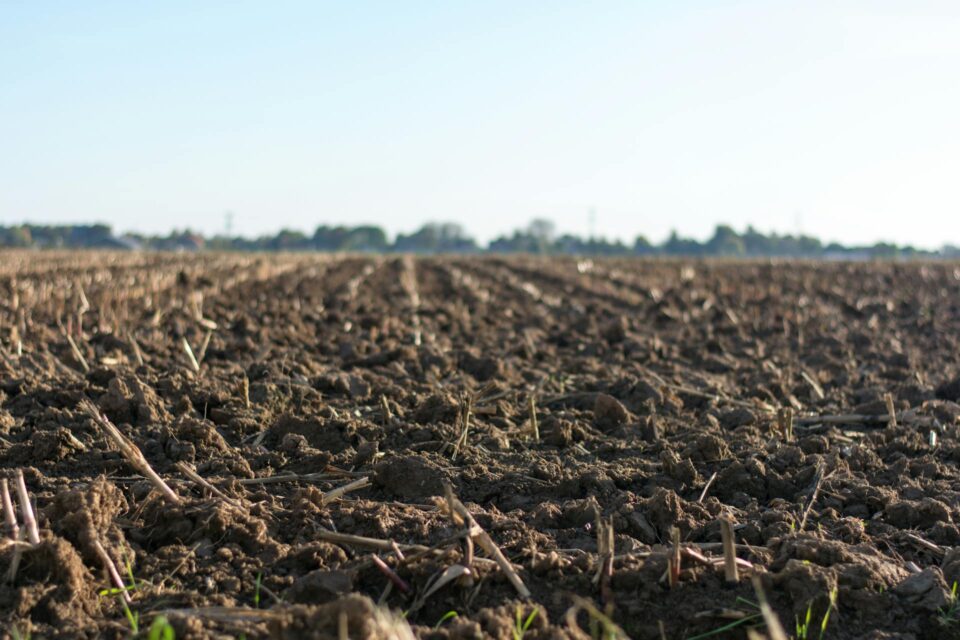
Autumn is about turning the stubble back into a seedbed. Fields are ploughed or cultivated, then drilled with the next crop. Rollers flatten and firm the ground; sprayers follow when needed. A field might change appearance three times in a fortnight. It is an exhausting, weather-dependent race, and “man with spade wanting a chat” is not a role they are currently hiring for.
Winter looks quiet from the lane, but it is not. Crops are establishing. There is spraying when conditions allow, hedge cutting, ditching, servicing machinery and repairing everything that broke when it was busy. Spring arrives with more fertiliser spreading, more spraying, more “if we don’t get on this field now, we’re in trouble.” Crops surge upwards. By early summer they are tall and fragile, and the cycle heads back towards harvest again.
Grassland has its own rhythm. In spring the grass takes off; the first silage or hay cut is a mad rush against the weather. Early summer might see grazing or a second cut. Autumn is the last bite before fields are rested or sheep are put on for the winter. Winter is mud, gateways getting destroyed, feeding stock and trying to keep animals alive and healthy until the grass returns.
You are trying to weave a hobby into that, without becoming a nuisance. That is the game.
The golden windows for detecting
Your ideal conditions are simple: the crop or grass is short or gone, the ground is firm enough that your plugs will go back neatly, and the farmer is not trying to work that exact field at the same time. When those three things line up, that is your moment.
On arable land, just after harvest on the stubble is often the sweet spot. The crop has gone, the straw may be baled, and the soil has been stirred enough to shuffle history a little closer to the coil. You can see the surface properly. Old pottery, tile, brick and iron all start to tell their story. You still need to check how soon they intend to plough or drill again; sometimes you only have a narrow window before the next operation.
After ploughing but before drilling can also be excellent, provided the clods are not ridiculous. It is hard work, and you need to be particularly careful to repair your holes, but coins and artefacts that have not seen daylight for years can suddenly appear on the upturned surfaces. Over winter, when the new crop is small and the ground is reasonably firm, you can sometimes detect on cereal fields with the farmer’s blessing. That is a privilege, not a right. If you are allowed, treat it like walking on someone else’s freshly laid carpet: stick to tramlines and bare patches, and do not stomp across young plants as if they were fair game.
Grass can be even better. Short, grazed pasture is detector heaven – firm ground, shallow targets, long-term history. After a hay or silage cut, when the grass has been taken off and the field is flat and green, you have another golden opportunity. Long rank grass, on the other hand, is almost pointless. You will be swinging half a foot above the soil, wrestling with stems and wondering why you bothered. Better to wait until it is cut or grazed down than force it.
When to stay away completely
There are times when you do not “work around it”, you just stay away. Standing crops are the obvious one. Wheat, barley, oats, oilseed rape, maize, potatoes, beet, carrots – if it is growing and there is a canopy of crop, that field is out of bounds. Not “I’ll just sneak up the tramlines.” Not “I’ll only do the headland.” Out of bounds. Every bent stem is money lost, and “I thought it would be all right” is exactly how you become a cautionary tale shared between farmers at the pub.
Wet ground is another no-go. If your boot sinks, your spade will crater. Wet soil smears instead of crumbling. It compacts when you stand on it, damages the structure the farmer relies on for drainage and yields, and your plugs will never go back neatly no matter how much you argue about it on Facebook. You will leave scars across the field that will still be visible in June and remembered for even longer.
Freshly drilled fields are also not for you. The seeds are just under the surface, relying on good soil contact. Digging at that stage is like wrenching bandages off a healing wound. Your plugs will disturb rows, pull out seeds and break the careful pattern the drill has laid down. Give it time; ask the farmer when they would be comfortable with you going back.
Silage and hay weeks are also best avoided. When you see big mowers, rakes, foragers and trailers buzzing around, that whole system is running at full tilt. Fields are effectively motorways for machinery, and a bloke with a spade is nothing but a slow-moving hazard. Likewise, lambing and calving are times to stay away from fields with sheep and new lambs or cows with calves. A defensive cow will not respect your hobby. Some will go through you, not around you. Stressing animals at that time is a fast way to lose a permission and possibly end up in A&E.
If the farm runs shoots, shooting days and game cover crops add another layer. Be particularly respectful around cover crops, woodland rides and the fringes of game covers. If there is a shoot on, stay clear unless the keeper has very specifically told you otherwise.
Using seasons in the conversation
One of the quickest ways to sound like you know what you are doing is to talk about seasons the way farmers do. It signals that you see their land as a workplace, not a theme park.
Instead of, “Mind if I come up whenever to have a scan over your fields?”, you say something like, “I usually like to come just after harvest on the stubble, and maybe once or twice over winter if it suits you. When are your busiest times so I can avoid getting in the way?” You have just shown that you know the year has rhythms beyond your free Saturdays.
Likewise, rather than, “Can I go on that field with the barley, I’ll just stick to the tramlines,” you might say, “I’ll stay off anything with a standing crop. Once you’ve combined and finished with the straw, would it be all right if I came back for a day on the stubble?” Farmers are used to people asking for things; they are not used to people framing it in terms of their workload. That difference is noticed.
Livestock: the moving obstacles
Livestock add their own set of rules. Cattle are the obvious one. Bulls and cows with calves are a hard no unless the farmer is absolutely clear, and even then you should be cautious. Even apparently calm cattle can get curious, crowd you and your kit, and suddenly you are the entertainment. Never back yourself into a corner or turn your back on a herd that is moving towards you with a bit too much enthusiasm.
Sheep are usually easier, but avoid lambing time and do not charge through flocks like you own the place. Keep gates shut, move quietly, and respect the farmer’s instructions about which fields are off limits. There may be reasons you cannot see, like worming treatments, disease control, or dogs that should not be disturbed.
Horses are another special case, especially on livery or rented paddocks. You must have explicit permission. Horses will chew, lick and kick almost anything, including your detector. They can get spooked by swinging coils and moving spades. You do not weave in and out of them as if doing slalom; you either detect well away from them, or you do not detect there at all.
The main point is simple: always ask how the farmer wants you to deal with stock and which fields to avoid at certain times. Do not guess.
How not to be “that bloke in the crop”
Every area seems to have one: the detectorist whose name comes with an eye-roll. You do not want to be him. He is the one who turns up unannounced when the combine is halfway through a field and wants to talk about Roman coins. He is the one who walks through standing crops because “it’s only a few feet.” He is the one who leaves plugs high and messy in grass where livestock graze, so a horse or cow can put a hoof straight into a hole. He is the one who churns up the gateway by driving in when the ground is soft, then acts surprised when the farmer is furious.
He is also the one who brings extra people without asking, or decides on his own that shooting days, lambing and calving “won’t be a problem.” Eventually he becomes the reason no one in a ten-mile radius will grant permission to anyone with a detector. The rest of us then spend years trying to undo the damage.
A simple seasonal cheat sheet
Every farm is different, but as a rough mental guide for the UK:
Late July to September is harvest and stubble season. This is often prime time for detecting, because crops are off and fields are bare or lightly covered. It is also hectic; you must work around whatever the farmer is doing. October and November are dominated by ploughing, cultivating and drilling. You may get days where a field is between operations and fair game, but you must avoid freshly drilled ground.
December to February can offer winter detecting on cereal fields where the crop is still small and on grass that is not too wet. This is where judgement comes in: if the ground is saturated and your boots are ripping it up, you call it off. March and April bring spring drilling, fertiliser, and more spraying. In many cases it is better to put your effort into permissions with grass or fallow rather than pushing it on busy arable land. May to early July is usually a quiet time for detecting on arable, because crops are tall and sensitive and there is often a lot of machinery activity. Grassland might be accessible before or after cuts, but again, you ask first.
The one rule that covers almost everything
If you take nothing else from this, take this: the field is not “your permission”. It is someone else’s livelihood that you have been allowed to poke holes in. That single idea should drive your behaviour.
Ask when suits them, not you. Stay away from obvious busy times. Keep off standing crops. Do not churn up wet ground. Leave gates and livestock exactly as you found them. Let them know when you are going and what you found afterwards. Make it clear that you see yourself as another pair of eyes and boots looking after their land, not just a treasure-hunter with a car boot full of muddy junk.
Get this right, and “plough, seed, graze, repeat” becomes “invite back, trust grows, history appears.” Get it wrong, and you will be back on the local park digging ring pulls, telling anyone who will listen that “farmers are funny about it these days” and wondering why no one will give you a chance.

Trending Now
The Day Everything Changed: Detectorists’ Genuine Life-Changing Finds