
For months, we’d been looking forward to this one. We normally try to get away to at least one proper metal detecting festival every year; a weekend where detecting is only part of the equation and camping, food, beer, old friends and questionable decisions make up the rest.
With Detectival not happening this year, we booked ourselves onto the Minelab 500, held down in Somerset around Yeovil and Podimore. It promised plenty of land, plenty of detectorists and, as always, that dangerous little thought in the back of your mind that somewhere out there could be the find of a lifetime.
The only slight concern was the weather. Britain had spent most of the summer being slowly baked and, by the time the rally came around, the ground was absolutely parched. We knew the digging was going to be hard, but equally, if the land produced, it could still be well worth the effort.
So we loaded up with the essentials: food, beer, tents, detecting gear and far more camping equipment than two people should reasonably need for a couple of nights in a field, and headed west.
Fortunately, my mate drives what can only really be described as a proper truck, so the journey down was relatively painless. There were only a couple of minor incidents, including coming within approximately a fag paper’s distance of rearranging the back of a car on the M25 and an ambitious overtake involving two enormous hay lorries.
Somehow, we arrived in one piece.
Arriving at the rally
Checking in was nice and straightforward. We were given a small goody bag and a map of the site, then headed over to get camp established. Before long the tents were up, beds sorted and gazebo assembled, which gave us a solid enough base for the weekend.
The main arena was a little smaller than I’d expected and there wasn’t loads of seating, but all the usual detecting brands and traders were there, along with a decent selection of food outlets. Most importantly, there was also a bar.
I had wondered whether it would cope with hundreds of thirsty detectorists descending on it at once, but despite a few queues, the team did an excellent job throughout the weekend. The food offering was decent too, with plenty of choice and enough to keep everyone fed without having to disappear off site.
A cold cider seemed like the obvious next move. Unfortunately, one cold cider has a habit of becoming several, and the sensible early night we had vaguely discussed on the journey down quickly disappeared.
Still, that is all part of it.
Day One: Welcome to concrete
Saturday morning started with the briefing, although there seemed to be a little confusion over exactly what time everything was kicking off. Rumours were already circulating that a few people had been out in the fields from around 7am, but with a huge amount of land available there was little point worrying about it.
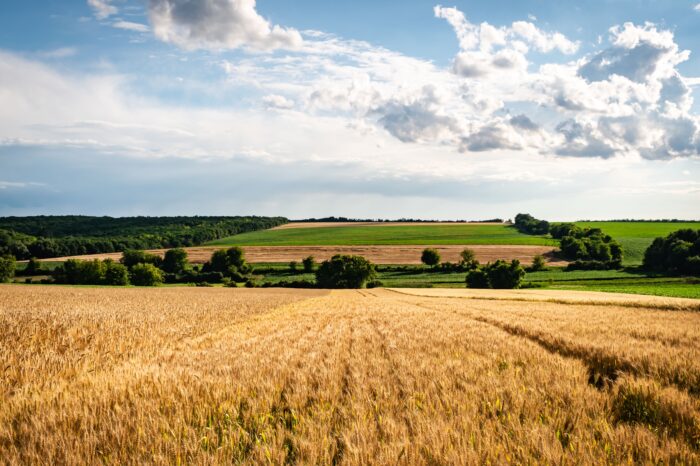
The first thing you noticed once you got into the fields was the heat. It was properly hot, and the ground conditions were brutal. Even where the fields had been cultivated, the soil was so dry that digging into it felt more like attacking concrete than farmland.
Signals were fairly thin on the ground to begin with too. I had walked a decent distance before the Manticore suddenly gave me an absolutely massive signal, ringing up somewhere around 80–90. It was deep and the ground was rock hard, so the hole quickly became far larger than I had anticipated.
There were several moments where I seriously considered giving up on it. Digging was exhausting and I had reached that point where you start wondering whether you are about to recover a large lump of iron for your trouble.
Eventually, though, something appeared from the bottom of the hole.
A large Roman coin.
That immediately made the effort worthwhile. After a quiet start, suddenly the heat and concrete-like soil didn’t seem quite so important.
Not long afterwards, I decided to work a line towards the far exit of the field, keeping tight to the hedge. Plenty of people had already walked over the area, but as every detectorist knows, that doesn’t necessarily mean very much. Within a short distance I hit another absolute clanger of a signal.
Out came a solid lump of earth with something clearly trapped inside it. Encased in the baked mud was a Roman fibula.
I wasn’t going to risk attacking it in the field, so I left it safely inside its little Somerset brick until later. With some water and a bit of patience, it eventually came free.
Two Roman finds from a field that had felt very quiet only an hour earlier was a pretty decent return.
My mate also managed a lovely little silver horseshoe pendant, but outside of that we didn’t see much more come up. By late afternoon our feet had started to complain rather loudly, so we decided it was time to retreat back to camp.
Cider, old friends and shooting stars
Once back at the campsite, boots came off, feet were assessed and the damage was accepted. After some food and a bit of recovery time, we headed back towards the arena for a well-earned cider.
For me, this is always one of the best parts of a rally. You inevitably bump into people you’ve met at previous events, catch up with old friends and end up talking to complete strangers as if you’ve known them for years.
Detecting rallies attract a brilliantly wide range of characters, and by Saturday evening the whole place had a really relaxed, friendly atmosphere. We saw people we’d met at previous rallies, made plenty of new friends and generally had a proper laugh.
The entertainment was excellent and the clear weather continued into the evening. With virtually no cloud, the sky was incredible, and we even saw shooting stars overhead.
Sitting around in a field, drinking cider and talking about Roman brooches beneath a completely clear Somerset sky is probably a fairly accurate summary of why these weekends are so enjoyable.
Day Two: The inevitable long walk
Sunday began with another long walk out to the fields.
In hindsight, I probably should have spent more time concentrating on one area rather than constantly moving, but rally detecting does strange things to your judgement. When you have hundreds of acres available, there is always a nagging suspicion that the really good field is the one just beyond the next hedge.
So you walk.
And then you walk a bit more.
Eventually we reached one of the newly opened areas. There was the usual bit of anticipation while everyone got themselves ready, detectors switched on and spades in hand, and then off we went.
About five minutes later I got another brilliant signal.
After yet more digging through the rock-hard soil, out came a well-encased Georgian fob seal, dating from around the 1800s. It was a fantastic find and one of those objects you know straight away is a bit special.
For me, it was one of the best finds of the weekend and easily one of my favourite finds for a long time.
My mate also managed a cut half, which was an excellent result, but after that the field became very, very quiet. A few modern coins appeared, but not much else.
Eventually we admitted defeat and headed back to camp. We weren’t alone either; there were plenty of slightly dejected detectorists wandering back from the fields by that point, all looking as though they had walked considerably further than the contents of their finds pouch justified.
A small afternoon nap was required before heading back to the arena for the raffle, live music and another evening enjoying the rally.
The rally itself
Overall, I thought the Minelab 500 was an excellent event. Putting on a rally of this size is a massive undertaking and I never underestimate the amount of work that goes on behind the scenes.
Hundreds of detectorists, huge areas of land, camping, parking, traders, catering, entertainment, landowners and Finds Liaison Officers all need coordinating, and most people attending will only ever see a fraction of what is involved.
The atmosphere was probably the biggest positive for me. There was a genuinely friendly feel throughout the weekend and we met loads of interesting and funny people.
Catching up with old rally friends was great, but we also made plenty of new ones. That social side is a huge part of why we keep going to these events.
The staff were consistently friendly and helpful, and the FLOs deserve a special mention. They were knowledgeable, approachable and incredibly patient, particularly considering how many detectorists must appear in front of them over the course of a weekend holding muddy objects and asking, “Any idea what this is?”
The food offering was good, the bar somehow managed to keep everyone suitably refreshed, and the entertainment added a lot to the evenings.
A few things that could be better
There really wasn’t much to criticise, but there were a couple of practical things that could have been better.
The main one was the toilets and showers. When clean they were absolutely fine, but with that many people on site they deteriorated pretty quickly and occasionally became something of an endurance test. A few more facilities, or more frequent servicing, would probably have made a noticeable difference.
The arena could also have done with more seating. After spending most of the day walking around fields, somewhere to sit becomes surprisingly important. Even a few additional straw bales dotted around would have helped.
There was one other thing that grated on me slightly, and this is probably less about the Minelab 500 specifically and more about where parts of the hobby seem to be heading.
The rise of the so-called “detecting celebrity.”
I’ve got plenty of time for some of the well-known faces in detecting. A lot of them genuinely contribute to the hobby, produce good content, promote responsible detecting and help get people interested in history.
That isn’t the issue.
What doesn’t sit particularly well with me is when a rally starts to feel as though certain people are receiving different treatment because they are better known. Seeing some people apparently being given lifts out to fields or getting what looks like preferential access feels a little demeaning to everyone else who has paid to attend.
There may well be perfectly legitimate reasons for some of it, and I certainly don’t know every circumstance, but the optics matter.
One of the things I’ve always liked about metal detecting is that once you step into a field, everyone is essentially equal. It’s you, your detector and whatever happens to be underneath your coil. Your subscriber count shouldn’t improve the soil beneath your feet.
Creating different tiers of detectorist based on followers, YouTube subscribers or how recognisable somebody is isn’t something I think the hobby particularly needs.
We need good ambassadors. We need responsible detectorists. We need people who promote the hobby properly and represent it well.
What we probably don’t need is a VIP culture.
Ultimately, we’re all just wandering around fields looking for bits of old metal. That is part of the charm.
That aside, these were fairly minor criticisms of what was, overall, a very well-run event.
What I’ll actually remember
Like most big rallies, the weekend wasn’t really defined by how much we found.
Yes, the finds matter. I came home with a large Roman coin, a Roman fibula and a Georgian fob seal, which is a result I would have happily taken before leaving home.
My mate had the silver horseshoe pendant and a cut half too, so between us we certainly had enough to make the weekend worthwhile.
But the things that stick with you are often everything around the detecting.
The ridiculous journey down. Setting up camp. Meeting old friends. Making new ones. Sitting around with a cider after a long day. The clear sky. The shooting stars. Comparing finds. Hearing rumours about what had come up three fields away. Convincing yourself that tomorrow you were definitely going to stay in one area, before immediately walking two miles the following morning.
That is what these weekends are really about.
The finds give you the stories, but the people make the memories.
Final thoughts
Would I go again?
Definitely.
The ground was savage, the fields were quiet in places and my feet were thoroughly destroyed by the end of it, but that is rally detecting.
You arrive with visions of hammered silver, Roman gold and the find of a lifetime, then spend several hours digging lead, aluminium and things that were almost certainly once part of a tractor.
Yet somehow the weekend becomes about far more than what ends up in the finds pouch.
You remember the people, the campsite, the laughs, the evening conversations and the slightly ridiculous amount of walking just as much as the individual finds.
Although coming home with a Roman coin, a fibula and a Georgian fob seal certainly bloody helps.
Thanks to Minelab and everyone involved in putting the event together. It was a massive achievement, a cracking weekend and exactly the sort of event that reminds you why the social side of detecting matters just as much as what comes out of the ground.
The Daily Dig Rallyometer
Finds: Better than I deserved
Ground conditions: Reinforced concrete
Weather: Surface of the Sun
People: Outstanding
Cider: Adequately tested
Feet: Deceased
Distance walked unnecessarily: Considerable
Times I thought the next field would be better: Far too many
VIP culture: Could do without it
Would I go again? Absolutely.