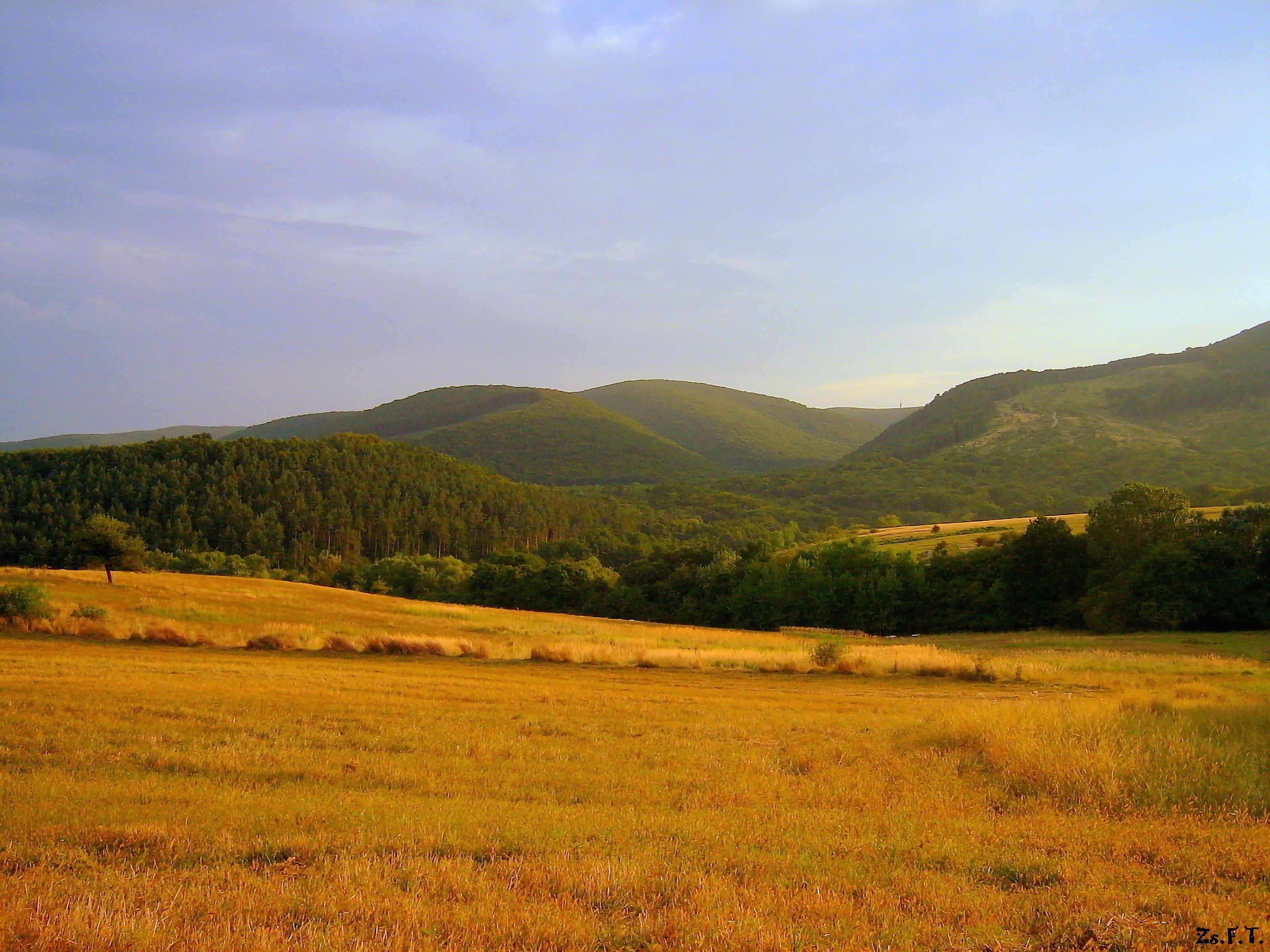


There is something fundamentally ridiculous about rally detecting.
You pay money to stand in a field with hundreds of other people, all carrying expensive machines designed to locate tiny pieces of metal, while collectively convincing yourselves that the next signal could be a hammered coin, a Roman brooch or something important enough to require a Finds Liaison Officer and a slightly nervous phone call.
Then, after several hours, most of us have found three bits of lead, half a buckle and something that definitely looked better before the mud came off.
And yet we keep going back.
I do, anyway.
For all its frustrations, rally detecting has an atmosphere that is difficult to replicate anywhere else in the hobby. There is anticipation, competition, camaraderie, disappointment, excitement and a truly impressive amount of completely unfounded optimism.
It is metal detecting turned up several notches.
And despite regularly wondering why I am doing it, I absolutely love it.
The night before
The madness begins before you have even left home.
The detector gets charged. Batteries are checked. Spare batteries are checked. Then checked again, because apparently batteries can disappear overnight.
You pack enough equipment for a minor archaeological expedition, despite knowing perfectly well that most of it will remain untouched inside the car.
There are spare coils, chargers, boots, waterproofs, sun cream, digging tools, finds boxes, headphones and various pieces of equipment you have convinced yourself might become essential despite not having used them since 2019.
Then there is the camping gear.
For a weekend rally, this can rapidly become a logistics exercise usually associated with moving house.
By the time the vehicle is loaded, there is barely enough room for the detector.
And all of this is accompanied by that little voice telling you that this could be the weekend.
This could be the field.
This could be the rally where everything comes together.
It probably won’t be.
But it could.
And that is enough.
The great field opening
There are few things in detecting quite like a new rally field being opened.
Everyone gathers around the entrance attempting to look calm while quietly assessing everybody else’s detector, coil choice, boots and apparent level of confidence.
You study the field.
Someone points towards a distant ridge and confidently announces that there used to be a Roman road over there.
Nobody knows where this information came from.
Someone else says the farmer found a hammered coin in the field twenty years ago.
Within minutes, this has evolved into a story involving a medieval market, Roman villa and possibly a Saxon burial.
Everyone waits.
Then the field opens.
At which point several hundred supposedly rational adults spread across the landscape as though somebody has fired the starting pistol at the world’s slowest sporting event.
And immediately we all make exactly the same mistake.
We walk too far.
The next field is always better
Rally detecting does terrible things to your judgement.
On a normal permission, I am perfectly capable of slowing down, working an area methodically and following the signals.
At a rally, that discipline seems to disappear completely.
You have barely walked twenty metres before you start wondering what is happening in the next field.
Then somebody walks past and says there has been a hammered found near the trees.
That is it.
The carefully planned detecting strategy is abandoned and you begin marching towards the trees.
By the time you arrive, someone mentions that a Roman fibula has just appeared two fields away.
Off you go again.
Eventually, after several hours of chasing rumours across the countryside, you realise you have walked about eight miles and properly detected approximately half an acre.
The clever detectorists are often the ones who simply pick an area and stay there.
I know this.
You know this.
Everybody knows this.
And yet the next field still looks better.
Rally rumours
No communication network on Earth is faster than rally gossip.
A find can come out of the ground at one end of a site and somehow become common knowledge at the opposite end within minutes.
Unfortunately, the story rarely survives the journey intact.
Someone finds a Roman coin.
Five minutes later it is a sestertius.
Ten minutes later it is a very rare sestertius.
By lunchtime, somebody has found a Roman hoard.
Another hour passes and there are apparently archaeologists on the way.
The reality is often considerably less dramatic.
But rally rumours serve an important purpose.
They maintain hope.
Because when you have spent the last two hours finding shotgun cartridges and lead, hearing that someone somewhere has just found something spectacular is exactly what you need.
It proves the history is there.
It also gives you another reason to walk three fields further than you intended.
The signals
Then there are the signals themselves.
On a rally, every good signal suddenly feels more important.
At home, you might hear a clean high tone and think, “That’s worth digging.”
At a rally, the same signal immediately becomes:
“This is it.”
You cut the plug carefully.
The signal remains in the hole.
Excellent.
A little deeper.
Still there.
Now your imagination begins working.
Silver?
Roman?
Something medieval?
You carefully extract another handful of earth.
And there it is.
A perfectly preserved aluminium drinks can.
Possibly deposited as recently as Thursday.
You stare at it for a moment, put it in the rubbish pouch and carry on.
Five minutes later, another good signal arrives.
“This is it.”
Again.
This ability to completely reset our expectations after every disappointment is probably one of the most impressive aspects of metal detecting.
Everyone else’s finds are better
Another strange feature of rally detecting is the apparent statistical impossibility that everyone else seems to be doing better than you.
You stop for a drink and somebody wanders over.
“Had much?”
You show them your Georgian halfpenny and small buckle.
They casually reach into their pocket.
“Not loads. Just this.”
Out comes a perfect hammered silver coin.
Then another.
And a Roman brooch.
They say something infuriating like:
“Quite quiet really.”
You congratulate them while internally reassessing every decision you have made since leaving the campsite.
Even worse is when somebody finds something good from an area you have already searched.
There are few experiences more humbling than hearing:
“Found this right near the gate.”
The same gate you personally detected around for twenty minutes.
Apparently not very well.
The people
For all the obsession with finds, the people are probably the real reason rallies work.
Metal detecting attracts an extraordinary mix of characters.
At any big event you will meet everyone from complete beginners using their first detector to people who seem capable of identifying a medieval strap fitting from twenty metres away while it is still covered in mud.
You talk to people you would probably never meet in normal life.
Jobs, backgrounds and ages largely disappear once the detectors come out.
Everyone speaks the same strange language of hammered coins, permissions, pasture, stubble, iron contamination and whether that particular bit of bronze is “definitely something”.
There are old friends you might only see once or twice a year and new ones made over a pint in the evening.
That social side matters more than people sometimes admit.
Yes, we are there to find things.
But after enough rallies, the weekends begin to become markers in time.
You remember who you were with, where you camped, what happened in the evening and the ridiculous conversations that carried on until far too late.
The finds become part of those memories rather than the entire point of them.
The competitiveness
There is definitely competition at rallies, even if we sometimes pretend there isn’t.
Nobody particularly wants their mate to find nothing.
But equally, there is a very specific emotion experienced when your mate finds something magnificent while you are holding a corroded decimal penny.
You are pleased for them.
Of course you are.
Absolutely delighted.
Couldn’t be happier.
You just wish they had found it tomorrow.
After you had found something better.
Fortunately, this competitiveness is usually good-natured. Most detectorists genuinely enjoy seeing good finds come up because it confirms that the land has potential.
The real enemy is not the person who finds the gold coin.
It is the person who finds the gold coin ten minutes after you decided that field was rubbish and left.
That one hurts.
The rubbish
Any honest account of rally detecting has to acknowledge that we dig an astonishing amount of rubbish.
For every photograph of a beautiful hammered coin posted online, there are hundreds of objects that quietly disappear into finds pouches without ever troubling Instagram.
Lead.
Foil.
Buttons with no decoration.
Melted aluminium.
Modern coins.
Car parts.
Farm machinery.
Shotgun cartridges.
Things that may once have served a purpose but have now spent seventy years developing exactly the right shape to sound magnificent through a detector.
This is the reality of the hobby.
The spectacular finds are spectacular precisely because they are rare.
If every signal was Roman silver, we would probably become bored surprisingly quickly.
Maybe.
I’d certainly be willing to test the theory.
The moment it happens
Then occasionally, rally detecting delivers exactly what you came for.
The signal appears.
The hole is dug.
Something emerges.
And for a few seconds, everything else disappears.
It might be a hammered coin, Roman brooch, seal matrix, buckle, token or something you cannot immediately identify.
The value is almost irrelevant.
What matters is that brief moment when an object which has been sitting beneath a field for hundreds or thousands of years suddenly appears in your hand.
That feeling never really gets old.
You look around at the same landscape hundreds of people have walked across all day and realise that, by complete chance, your coil passed over exactly the right few centimetres of soil.
That is the addiction.
Not treasure.
Possibility.
Why rallies still matter
Big rallies get criticised, sometimes fairly.
There can be too many people, too much commercialisation and occasionally too much emphasis on personalities and social media rather than the actual hobby.
Land can be quiet. Fields can be difficult. Organisation varies enormously.
There is also a danger that rallies create a distorted idea of detecting, particularly for newcomers.
Real metal detecting is often much slower.
Permissions take effort to find. Many sessions produce very little. Good sites are worked carefully over months or years rather than attacked by hundreds of machines during a weekend.
But rallies still have an important place.
They bring people together.
They give detectorists access to land they would otherwise never search.
They introduce beginners to the wider detecting community.
They create stories.
And every now and then they produce something genuinely important.
For many of us, they also provide an excuse to disappear for a weekend with some mates, sleep badly in a tent, drink slightly too much cider and talk complete nonsense about history.
There are worse ways to spend a weekend.
Completely ridiculous
So yes, rally detecting is ridiculous.
We pay money to walk enormous distances while carrying expensive electronic equipment and digging holes in extremely hard ground.
We follow rumours that would embarrass a medieval village.
We become convinced that the next field is better.
We compare finds.
We complain about our feet.
We spend evenings discussing pieces of metal that most normal people would immediately throw in the bin.
Then we drive home exhausted, empty the car, clean the mud off everything and start wondering when the next one is.
Because beneath all the nonsense is something genuinely brilliant.
For a couple of days, the entire weekend revolves around history, possibility, friendship and the thought that the next signal could be anything.
Most of the time it isn’t.
But one day it might be.
And apparently that’s all the encouragement I need.